

Abstract
- Rule of thumb: Apply cold to acute, recent injuries accompanied by swelling—apply heat to muscle tension and chronic conditions without inflammation.
- When it comes to muscle soreness, the evidence is mixed; many people find gentle heat and light exercise more comfortable than cold.
- Modern approaches such as PEACE & LOVE (Dubois & Esculier, 2020) call into question the routine use of ice for soft-tissue injuries.
- Neither heat nor cold can replace a medical evaluation. If you experience severe or persistent pain, the cause should be evaluated by a medical professional.
Heat or Cold? What Helps with Sore Muscles, Injuries, and Tension
Whether heat or cold is the right choice depends primarily on the situation: Cold is generally used for fresh, acute injuries with swelling, while heat is generally used for muscle tension and chronic conditions without inflammation. For classic muscle soreness, the research findings are mixed—in this case, it often comes down to what feels more comfortable for you.
In this guide, you'll learn when heat and when cold are appropriate, how to use both safely, what modern approaches to injury care recommend, and what mistakes you should avoid. Important note: This text is not a substitute for medical advice.
How Heat and Cold Affect the Body
Cold constricts blood vessels, slows the transmission of nerve impulses, and can thus temporarily reduce the sensation of pain. It is traditionally used to limit swelling and pain in fresh injuries.
Heat dilates blood vessels, promotes blood circulation, and relaxes muscles. This makes it the preferred choice for tense, tight muscles and stiff joints—as long as there is no acute inflammation.
What Modern Concepts Say
For a long time, the RICE protocol (Rest, Ice, Compression, Elevation) was the standard approach for treating injuries. More recent scientific articles emphasize different aspects: The PEACE & LOVE concept, presented by Dubois and Esculier (2020) in the British Journal of Sports Medicine, emphasizes protection, load management, and active recovery, and explicitly questions the routine use of ice for soft-tissue injuries—because inflammation is a beneficial part of the healing process. Cold therapy can therefore be useful for short-term pain relief, but it is no longer considered a standard practice.
Heat or Cold: A Decision-Making Guide
This overview categorizes the most common situations. When in doubt, follow this rule: For acute swelling, apply cold; for muscle tension, apply heat.
| Situation | Recommendation | Application |
|---|---|---|
| Acute injury, swelling (first 1–2 days) | More like cold | Cooling compress wrapped in a cloth, 10–15 min., with breaks |
| Muscle tension, stiffness | More like warmth | Heating pad, warm bath, sauna |
| Chronic stiffness (without inflammation) | More like warmth | Warm-up before exercise, gentle mobilization |
| Delayed-Onset Muscle Soreness (DOMS) | Mixed Evidence | Gentle warmth or coolness, depending on your preference; light exercise |
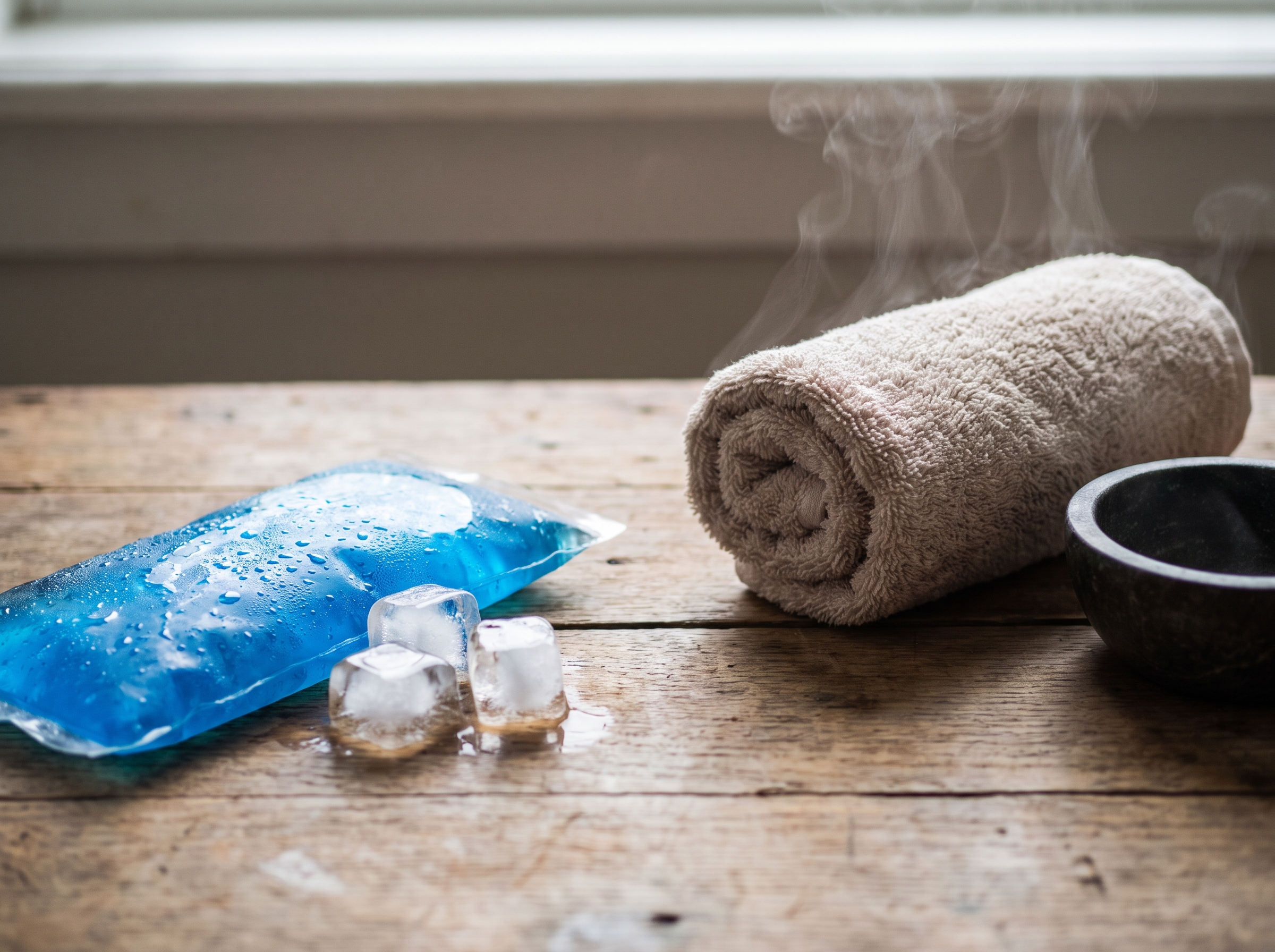
Muscle Soreness: What Really Helps?
Muscle soreness (known technically as DOMS) is caused by minor stress on the muscles, usually following unfamiliar or particularly intense exercise. Research on this topic is inconclusive: Some people find cold, such as a cold bath, to be soothing, while others prefer heat and light exercise to stimulate blood flow.
In practice, a pragmatic approach works best: active recovery with light exercise, plenty of sleep, and a treatment that feels good. Neither heat nor cold makes muscle soreness go away immediately—it usually subsides on its own within a few days.
Using It Safely: What You Should Keep in Mind
Whether it's hot or cold—the right dosage protects against skin and tissue damage.
- Never apply cold directly to the skin: Always wrap ice packs in a cloth and limit each application to about 10 to 15 minutes, with breaks in between.
- Keep the heat at a moderate level: comfortably warm rather than hot. Temperatures that are too high can irritate the skin.
- Do not apply heat to open wounds or areas of acute inflammation: Heat can exacerbate existing inflammation.
- Watch for warning signs: Numbness, severe redness, or increasing pain are signs that you should stop.
Recovery Equipment: Useful Add-Ons
If you work out regularly, you'll benefit from a consistent recovery routine. With a 30-day return policy and carbon-neutral shipping, you can take your time to find the right solution. A selection of tried-and-true gear:
- Recovery —from foam rollers to massage devices for active recovery.
- Saunas & Infrared Cabins – for soothing warmth to relieve muscle tension and help you relax. Learn more in our guide, “Sauna After Exercise.”
- Cryotherapy Equipment – for anyone who wants to use cold therapy in a targeted way. To learn how ice baths and cold chambers differ, read our comparison of cold chambers vs. ice baths.
Common Mistakes in Heating and Cooling Applications
- Applying heat to acute swelling: Heat can exacerbate a new inflammation. In the first few days after an injury, applying cold is usually the safer choice for pain relief.
- Applying ice for too long or directly to the skin can cause cold damage. Always use a cloth and limit the application time.
- Ignoring the cause: Heat and cold can relieve symptoms, but they do not repair structural damage. Persistent pain should be evaluated.
- Hoping for a miracle cure: Both methods are building blocks of recovery, not a substitute for sleep, exercise, and patience.
Frequently Asked Questions
Heat or cold for sore muscles?
The evidence is mixed. Many people find gentle heat and light movement pleasant, while others prefer cold. Neither approach measurably speeds up the recovery from muscle soreness, but both can make it more bearable. Choose whatever feels better for you.
When should I apply ice to an injury?
For fresh, acute injuries accompanied by swelling, applying cold can provide short-term pain relief during the first one to two days. However, modern approaches such as PEACE & LOVE no longer consider the use of ice to be mandatory. In cases of severe injuries, it is important to seek medical evaluation.
When is heat better than cold?
Heat is beneficial for tense, stiff muscles and chronic stiffness without acute inflammation. It promotes blood circulation and relaxes the muscles—ideal before gentle exercise.
Can I combine heating and cooling?
Contrast therapy is a popular treatment for certain conditions. However, it should be used selectively and not for acute swelling. If in doubt or if symptoms persist, seek professional advice.
How long should a treatment last?
Limit cold treatments to about 10 to 15 minutes, with breaks in between. Heat treatments can be comfortably warm and last a little longer, but should never become hot. Listen to your body and stop the treatment if you notice any warning signs.
Conclusion
Heat or cold isn’t a matter of belief, but a matter of the situation: Cold can provide short-term relief for acute, swollen injuries, while heat relaxes tight muscles and chronic stiffness. When it comes to sore muscles, what matters most is what feels good to you. Use both in moderation—and don’t treat any severe or persistent symptoms on your own.
Want to develop your own relaxation routine? Contact us for a personalized consultation on the right equipment. Scientific source for the PEACE & LOVE concept: Dubois & Esculier, 2020, British Journal of Sports Medicine.