

Abstract
- Muscle recovery usually takes 24 to 72 hours, depending on the muscle group and the intensity of the workout—smaller muscles recover faster than larger ones.
- Muscle protein synthesis remains elevated for up to 72 hours after strength training, peaking about 24 hours after the session.
- Sleep, nutrition, stress, and training intensity set the pace—not miracle cures.
- Active recovery, compression, heat/cold, and fascia tools can aid recovery, but they are no substitute for rest.
Muscle Recovery: How Long Does It Really Take?
Muscle recovery usually takes 24 to 72 hours, depending on the muscle group worked, the intensity of the workout, and your fitness level. The most important factor behind this is muscle protein synthesis: it is stimulated by strength training, peaks about 24 hours after exercise, and remains elevated for up to 48–72 hours in most people (Phillips et al., 1997; MacDougall et al., 1995).
This means that if you put the same muscle under intense strain too soon, you’re training while it’s still in the process of healing—and thus slowing down your own progress. In this guide, you’ll find specific time frames for each muscle group, the key factors that influence recovery, and tried-and-true strategies to measurably support your recovery.
What Happens in the Muscle During the Recovery Phase
Strength training causes tiny microtears in the muscle fibers. This is not damage, but rather the stimulus that prompts the body to rebuild the fibers so they are stronger and more resilient. This process occurs in several phases: first, a brief inflammatory response that attracts repair cells; then, the actual repair; and finally, adaptation—the muscle becomes stronger than it was before (supercompensation).
The driving force behind this adaptation is muscle protein synthesis (MPS). This is the process by which the body uses amino acids to build new muscle protein. After a workout, MPS is significantly increased—and it is precisely during this window that muscle growth occurs. It’s important to understand that muscles don’t grow during the workout, but during the rest period afterward.
Why Big Muscles Take Longer
Large muscle groups, such as the legs and back, are heavily strained during heavy compound exercises (squats, deadlifts) and consequently require a significant amount of recovery. Smaller muscles, such as the biceps, calves, or the front of the shoulders, on the other hand, often recover more quickly. Additionally, the more intense the workout, the closer it is to muscle failure, and the less familiar the stimulus, the longer the rest period required.
Recovery Times by Muscle Group and Intensity
The following values are guidelines for healthy, physically active adults engaged in moderate to intense exercise. They are not a substitute for listening to your own body, but they do provide a reliable framework for planning your workouts.
| Muscle Group / Stimulation | Typical recovery | Note |
|---|---|---|
| Small muscles (arms, calves, shoulders) | 24–48 hours | More frequent training is possible |
| Large muscles (legs, back, chest) | 48–72 hours | Ideal for 2 times a week per group |
| Intensive basic exercise pushed to the point of failure | up to 72 hours+ | Maximum strength is not fully restored until 48–72 hours later |
| New/Unfamiliar Stimulus (Start of Training) | 72 hours+ | Severe muscle soreness is normal |
A good rule of thumb for everyday training: Allow about 48 hours of rest per muscle group if you’re training at a moderate intensity (2–3 sets, 8–12 reps, not to failure). If you’re training hard or very intensely, 72 hours is more realistic for large muscle groups. That’s exactly why splits like Push/Pull/Legs work so well—they give each group time to recover while you continue training on other days.
These factors determine your recovery rate
Sleep
Sleep is the most effective recovery factor of all. During deep sleep, the body releases growth hormone, which regulates repair and regeneration. Chronic sleep deprivation noticeably slows down recovery. Seven to nine hours is the baseline for most people who exercise—learn more in the guide to sleep and recovery.
Nutrition
Without enough protein, the body lacks the building blocks needed for repair. As a general guideline, active exercisers should aim for about 1.6–2.2 g of protein per kilogram of body weight per day. Carbohydrates replenish energy stores (glycogen), and adequate hydration keeps the metabolism going. Micronutrients such as magnesium also play a role in normal muscle function.
Training Intensity and Volume
The harder and more extensive a workout is, the longer it takes to recover. That’s not a reason to train less—it’s the reason why scheduled rest periods make sense. After several intense weeks, a deload week helps reduce accumulated fatigue.
Stress and Everyday Life
Mental stress, lack of sleep, and a busy schedule directly affect recovery because persistently elevated stress hormone levels interfere with the body’s repair processes. Recovery is always the result of both training and daily life—not just what happens at the gym.
How to Speed Up Muscle Recovery
There is no way to bypass the body’s natural healing process. But there are ways to support recovery and help you feel well and perform at your best again more quickly. The following overview categorizes the most common methods.
| Method | In what ways does she help? | Effort |
|---|---|---|
| Enough Sleep | The foundation of all recovery | Free, highest leverage |
| Active recreation (leisurely walking, biking) | Blood circulation, mobility | Low |
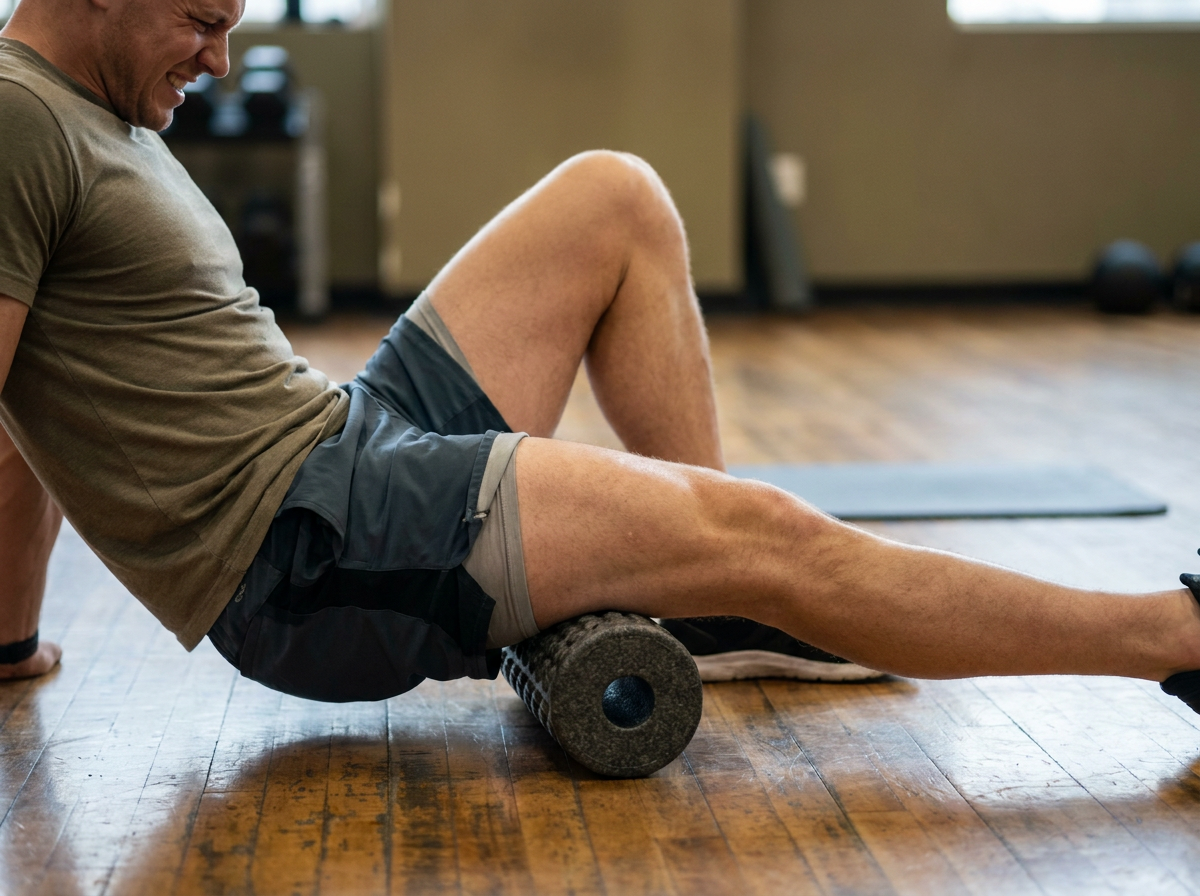
| Fascia Roller / Massage | Perceived Tension, Mobility | Low |
| Compression (Recovery Boots, Clothing) | Heavy legs, perceived recovery | Medium |
| Heat (Sauna) & Cold (Ice Bath) | Relaxation, subjective well-being | Medium |
The order is crucial: First, consistently implement the free basics (sleep, nutrition, rest)—then refine them with tools. If you sleep poorly and don’t eat enough, you won’t recover any faster, even with the most expensive recovery device.
Buying Guide: Useful Recovery Tools
Once you’ve mastered the basics, the right tools can make recovery more enjoyable and practical for everyday life. A foam roller is often all you need to get started—it’s affordable, versatile, and ideal for daily mobility. If you’re on your feet a lot or train intensively, you’ll benefit from compression therapy, such as recovery boots. And for a holistic approach—heat, cold, massage—you’ll find the right solutions for home and the gym in the Recovery category.
As an authorized retailer offering a manufacturer’s warranty and a 30-day return policy, you can take your time testing Recovery-Equipment at Kraftathlet . Not sure what’s right for your workout? Our team will provide personalized advice—just contact us below.
Common Mistakes in Regeneration
- Don't work the same muscle every day. Without a 48–72-hour break, you'll be training into fatigue and plateauing.
- Trying to make up for a lack of sleep with supplements. No powder can replace a full night's sleep.
- View muscle soreness as a necessary goal. Soreness is a sign of unusual exertion, not a measure of training success.
- Recovery tools instead of the basics. First, sleep, nutrition, and rest—then the sauna, ice bath, and so on.
- Ignore the warning signs. Persistent fatigue, a decline in performance, and poor sleep can be signs of overtraining.
Frequently Asked Questions
How long should I let a muscle rest after a workout?
As a general rule: 24–48 hours for small muscle groups, 48–72 hours for large muscle groups. After very intense workouts or when doing unfamiliar exercises, it may take even longer.
Can I work out when I have sore muscles?
Mild muscle soreness is nothing to worry about—light exercise targeting other muscle groups or active recovery is fine. If you’re experiencing severe soreness, you should rest the affected muscle group until your strength is fully restored.
Does more protein speed up recovery?
But only up to a certain point. About 1.6–2.2 grams per kilogram of body weight is enough to meet the needs of most exercisers. Any more than that doesn't provide any additional recovery benefits.
Does an ice bath really help with muscle recovery?
Cold therapy can improve subjective well-being and perceived recovery. However, during periods when you’re specifically trying to build muscle, it’s best to exercise caution immediately after strength training—sleep and nutrition are more important at that time.
How can I tell when a muscle has fully recovered?
Good indicators include: no more noticeable muscle soreness, your usual strength has returned, and you feel rested instead of worn out. If you want a more precise picture, you can track your heart rate variability over time.
Conclusion
Muscle recovery isn’t a matter of chance—it can be planned. Allow 24–72 hours per muscle group, give larger muscles more time than smaller ones, and treat sleep, nutrition, and rest as the foundation—everything else is fine-tuning. Those who take their recovery seriously don’t train less; they train smarter and make more progress in the long run.
Want to support your recovery with the right tools? Contact our team —we'll help you find the right recovery setup for your workout.