

Abstract
- Stretching after a workout has a barely measurable effect on reducing muscle soreness: A large Cochrane review found only minimal effects on a 100-point scale.
- Its true value lies elsewhere: flexibility, relaxation, and a mindful way to end the workout.
- Gentle exercise, sleep, and time are more effective at relieving muscle soreness than intense stretching.
- Combine light stretching with a foam roller and active recovery —as part of a routine, not as a miracle cure.
Stretching After a Workout: The Real Benefits of Stretching for Recovery
Stretching after a workout does little to reduce muscle soreness—the best available evidence shows this quite clearly. Its benefits lie primarily in improving flexibility, promoting relaxation, and providing a mindful way to end the session, not in speeding up muscle recovery. Anyone who approaches stretching with this realistic expectation is doing it right; anyone who sees it as a cure for muscle soreness will be disappointed.
There are many myths surrounding stretching. That’s why we’re taking a objective look at the research here, clarifying what stretching can and cannot do, and how you can effectively incorporate it into your recovery routine.
What Research Says About Stretching and Muscle Soreness
The most comprehensive overview comes from a Cochrane review by Herbert, de Noronha, and Kamper (2011). The authors evaluated randomized trials—including a large one with over 2,300 participants. The result: Stretching before, after, or both before and after exercise reduced muscle soreness by an average of only about one point on a 100-point scale one day after the workout. Even when stretching was performed both before and after training over the course of a week, the effect was around four points—statistically measurable, but very small in practical terms.
The authors' conclusion is clear: Muscle stretching does not lead to clinically significant reductions in delayed-onset muscle soreness in healthy adults. In short: If your goal is “less muscle soreness,” stretching isn’t the right tool.
What Stretching Is Good For
That doesn’t mean stretching is useless—just that its benefits lie elsewhere. Regular stretching can improve flexibility and range of motion, which is helpful for many exercises and in everyday life. A gentle cool-down stretch also reduces muscle tension after a tough workout and is seen by many as a pleasant, mindful way to end a session. Flexibility can be developed—and stretching is the right way to do it.
Static or dynamic—and when?
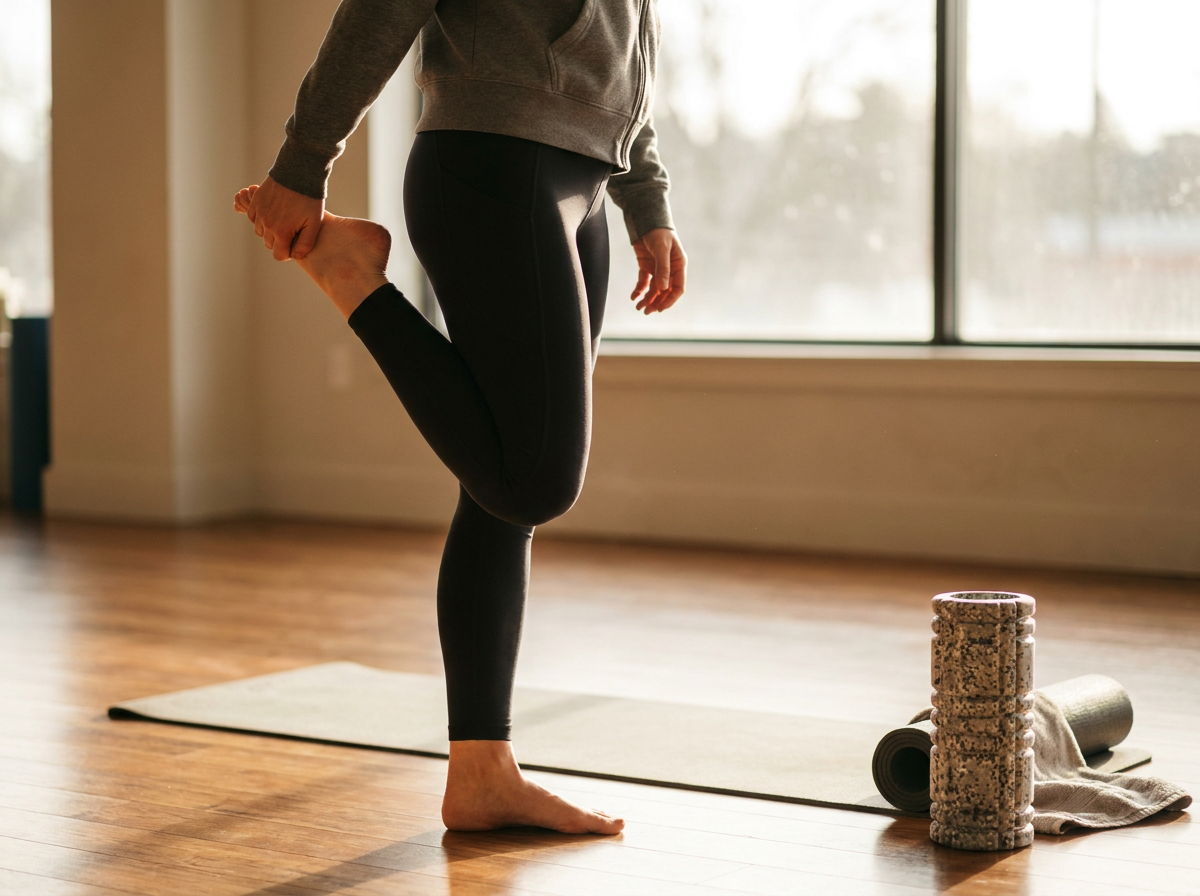
Broadly speaking, there are two types. Dynamic stretching (controlled, moving mobilization) fits well into a warm-up because it activates the range of motion without significantly reducing muscle tension. Static stretching (holding a position still) is better suited for the cool-down or a separate flexibility session. For the sole purpose of improving flexibility, longer, gentle stretches on non-training days or well after strength training are recommended.
| Your Goal | Does stretching help? | More suitable |
|---|---|---|
| Relieve Muscle Soreness | Hardly (minimal effect) | Light exercise, sleep, time |
| Improve flexibility | Yes, if it's regular | Static Stretching, Mobility |
| Relax / Wind Down | Yes, subjectively | Gentle stretching, breathing |
| Warm-up | Yes, dynamically | Dynamic Mobilization |
Stretching as Part of a Meaningful Recovery Routine
Recovery is a combination of factors, not a single tool. Stretching complements other elements such as a light cool-down, adequate sleep, good nutrition, and self-massage. Many people combine gentle stretching with a foam roller to target tense areas. Our guide to foam roller exercises shows you how to use the roller correctly. The guide to recovery equipment & recovery tools provides an overview of useful aids.
You'll find a selection of mats, rollers, and recovery tools bundled together in our " Recovery" category.
Why choose Kraftathlet? With a ★ 4.88/5 rating based on customer reviews and a 30-day return policy, you can try out recovery tools at your leisure and find the gear that fits your routine.
Common Mistakes When Stretching After a Workout
- Misunderstanding stretching as a remedy for muscle soreness. The effect is minimal—don't expect miracles.
- Stretch into the pain. A gentle pull is enough; aggressive overstretching offers no additional benefit.
- Perform static stretches immediately before maximum strength exercises. Dynamic mobilization is the better choice before heavy sets.
- Stretch only once. Flexibility comes from consistency, not from a single session.
- Stretch cold muscles. A short warm-up before more intense stretching makes the process more comfortable and controlled.
Frequently Asked Questions
Does stretching help with muscle soreness?
Hardly. The 2011 Cochrane Review found only minimal effects—about one point on a 100-point scale. Light exercise, sleep, and simply giving it time are more effective at relieving muscle soreness.
Should I stretch before or after my workout?
Dynamic mobility exercises are best done before your workout; gentle static stretching for flexibility is best done after your workout or as a separate session. You should avoid intense static stretching right before heavy strength sets.
How long should I hold a stretch?
For flexibility, gentle stretches lasting about 20 to 60 seconds per position are typical, without pushing past the point of pain. Consistency over the course of several weeks is more important than the exact duration.
Which is better for recovery: stretching or using a foam roller?
Both are primarily effective on a subjective level and for improving flexibility, rather than as a powerful remedy for muscle soreness. In practice, they complement each other well—a short roll-out followed by gentle stretching to wrap things up.
Do I have to stretch after every workout?
No. Stretching is optional and helps with flexibility and relaxation. If you find that the cool-down is beneficial, do it regularly; if not, it's not a must for your recovery.
Conclusion
Stretching is a great way to improve flexibility and wind down after a workout—but it’s not an effective remedy for muscle soreness. When you understand this, you can approach stretching with realistic expectations and combine it with sleep, exercise, and self-massage to create a well-rounded recovery routine. Want to build your recovery routine with the right tools? Reach out to us —we’d be happy to advise you.